Lost in Translation: What That Mistake Really Cost a Brand
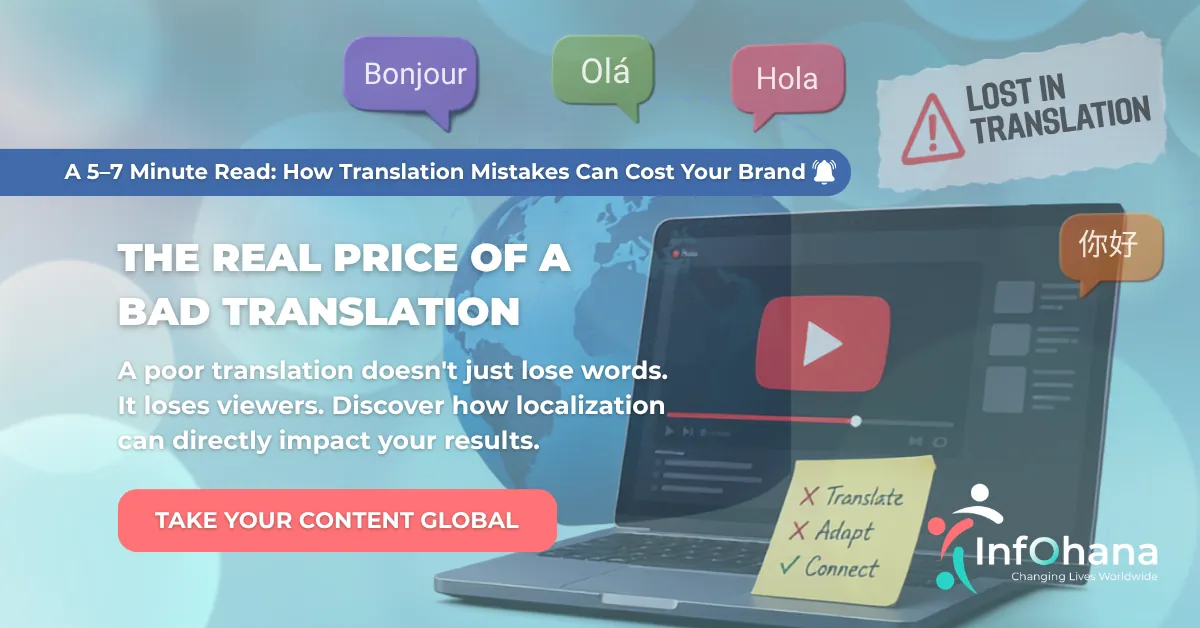
A bad translation isn’t just a linguistic error. It can become a business decision with measurable consequences.
For brands expanding into international markets, a poorly localized message affects more than words. It influences how audiences perceive a company, how long they watch its content, whether they trust the brand, and ultimately whether they take action.
In video content, the cost goes beyond a misworded slogan. It can appear in every line of dialogue, every cultural reference, every emotional moment, and every call to action that doesn’t connect with the target audience.
On YouTube, these consequences become visible quickly. The platform’s audience retention analytics allow creators and brands to identify where viewers stop watching, particularly during the first moments of a video. According to YouTube’s official guidance, the first 30 seconds are a key indicator of whether a video delivers on the expectations created by its title and thumbnail.
For brands, that means localization is not simply a translation task.
It is part of the marketing strategy.
When Translation Impacts Brand Perception
Imagine a company invests significant resources into creating a high-quality YouTube video.
The script is carefully written. The production is polished. The thumbnail is optimized. The title is designed to attract clicks.
Then the content is translated into another language using a literal approach.
The message is technically correct, but it doesn’t sound natural.
The humor doesn’t work. A cultural reference feels unfamiliar. The opening lacks impact. The call to action sounds unnatural.
The audience notices.
This is where brand localization becomes different from translation.
Translation asks:
“How do we say this in another language?”
Localization asks:
“How would this audience naturally experience this message?”
That distinction can directly influence how a brand is perceived.
Research from Lokalise found that 29% of marketing and sales leaders experienced damage to their brand reputation because of localization mistakes, while 39% reported that their most expensive error cost more than $10,000 in lost revenue, team resources, and reputation repair.
For brands using YouTube as part of their growth strategy, a localization mistake can quickly become a business problem.
The Hidden Cost of Poor Localization
The financial impact of poor localization is rarely obvious.
Instead, it appears through performance:
- Lower click-through rates.
- Reduced watch time.
- Early audience drop-off.
- Fewer conversions.
- Lower engagement.
A video may have excellent production quality but still underperform because the message doesn’t resonate with the target audience.
A title may generate clicks but create the wrong expectations.
A localized introduction may fail to capture attention.
A voice-over may communicate information correctly while losing the personality of the original creator.
Each issue creates friction. And on YouTube, friction often leads to lost viewers.
This is why YouTube audience retention should be part of any localization strategy. If an original video performs well but a localized version loses viewers early, the issue may not be the content itself, it may be how that content was adapted.
Localization Is Part of the Sales Funnel
Many brands still treat localization as a final production step.
But effective video localization should be integrated into the entire customer journey:
Impression → Click → Watch Time → Engagement → CTA → Conversion
Every stage matters.
If the thumbnail is localized but the title sounds unnatural, viewers may not click.
If the opening doesn’t connect, viewers leave.
If the CTA feels culturally disconnected, conversions decrease.
This is why successful multilingual content strategies adapt more than dialogue.
They also consider:
- Titles and metadata.
- Thumbnail text.
- Cultural references.
- Calls to action.
- Voice direction and tone.
- Audience expectations.
InfOhana’s YouTube Localization Service follows this broader approach by combining localization with SEO, dubbing, localized thumbnails, community management, and performance analysis.
For brands using YouTube to generate awareness, leads, or sales, localization becomes part of the growth strategy, not simply a translation task.
Localization Protects the Value of Your Content
A single video can reach audiences across multiple markets.
But every audience expects content that feels natural, relevant, and authentic.
Sometimes effective localization involves small changes:
- Rewriting a title instead of translating it.
- Adapting humor and references.
- Modifying a call to action.
- Adjusting thumbnail copy.
- Preserving the creator’s personality.
These decisions may seem minor, but together they create localized content that builds trust and improves performance.
The real goal of a multilingual YouTube strategy is not simply to make a brand speak more languages.
It is to make a brand feel local in more markets.
At InfOhana, we believe localization should support the complete viewer experience, from titles and thumbnails to scripts, dubbing, metadata, and audience engagement.
Because when localization is done strategically, brands don’t simply translate content.
They give it a better chance to perform.
Ready to Take Your YouTube Content Global?
Expanding your YouTube presence requires more than translation.
If you’re a creator, brand, media company, or marketing team looking to connect with a global audience, InfOhana can help you develop a YouTube localization strategy designed around your content, audience, and growth goals.
Talk to InfOhana to discover how professional localization, dubbing, localized thumbnails, SEO, and multilingual content strategies can help your brand connect with audiences worldwide.