When a Thumbnail Speaks the Language, but Doesn’t Connect with the Audience
Expanding a YouTube channel into new markets is no longer just about translating titles or dubbing videos. More creators, media companies, and brands now understand that localization is a comprehensive process in which every element of a video influences its performance.
One of the most overlooked—but most impactful—elements is the thumbnail.
Many teams assume that replacing the text on a thumbnail with its equivalent in another language is enough. In reality, that approach rarely delivers the same results as the original content.
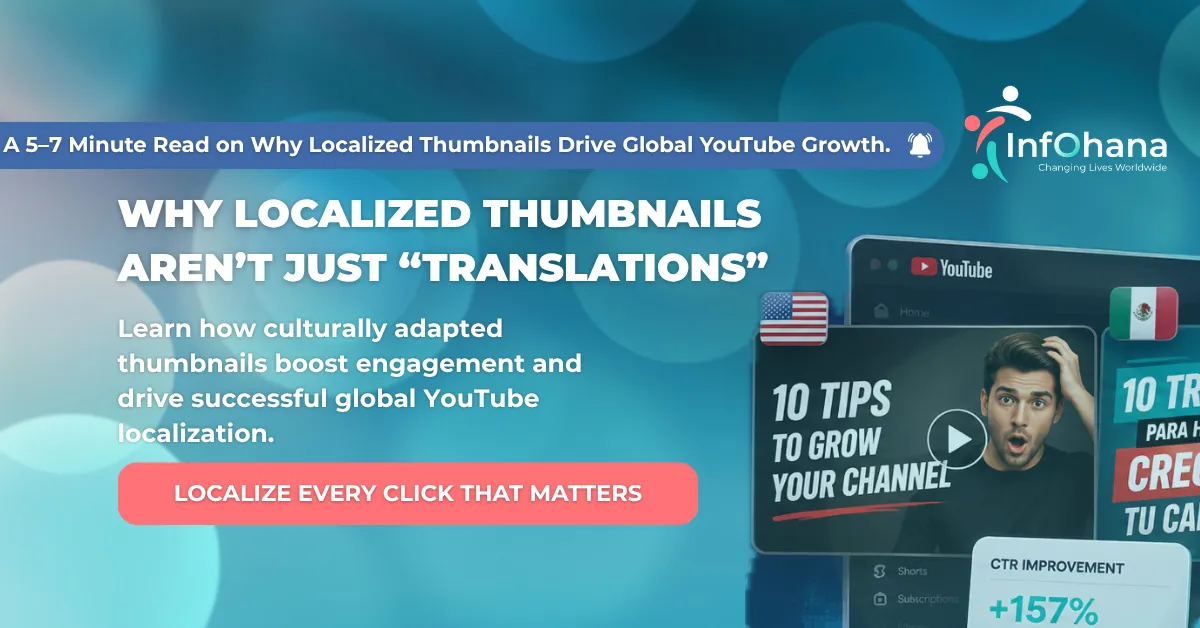
A localized YouTube thumbnail is not simply a visual translation. It is an adaptation designed to encourage a specific audience to do exactly what you want them to do: stop scrolling, click, and start watching.
This same principle applies across every stage of content localization. In fact, we explore this idea further in our article, “Why Spanish Dubbing Became a Strategic Priority for OTT Platforms in 2026”, where we explain why successful global expansion depends on adapting content for each audience, not simply translating it.
In an environment where millions of videos compete for attention every day, a thumbnail that doesn’t align with the cultural expectations of its audience can significantly reduce the effectiveness of an international expansion strategy.
A Thumbnail Is a Cultural Decision, Not Just a Linguistic One
When users browse YouTube, they make decisions in a matter of seconds. Before reading the title or hearing the introduction, they’ve already decided whether the content looks relevant based on its visual presentation.
That’s why YouTube thumbnail localization involves much more than changing the words.
An effective localized thumbnail takes into account factors such as:
- Visual hierarchy.
- Colors that resonate with a specific market.
- Typography size and style.
- Facial expressions that feel natural to the target audience.
- Cultural references that may vary significantly from one country to another.
What sparks curiosity in Mexico may have little impact in Spain. An expression that works in Argentina may feel unfamiliar to viewers in Colombia. Even the level of emotional intensity expected in a thumbnail can differ depending on the market.
In other words, a successful localized thumbnail keeps the same marketing objective while adapting the way that message is communicated.
As the YouTube Creator Academy explains in its guide to designing effective thumbnails, strong visual design is one of the first factors influencing whether viewers choose to watch a video.
That’s what transforms a simple translation into a true localized video marketing strategy.
CTR Starts Before the Video Even Plays
Many companies invest heavily in dubbing, subtitles, and video localization while using the exact same thumbnail across every market.
The problem is that YouTube’s algorithm measures whether people click before anything else.
If the Click-Through Rate (CTR) drops because a thumbnail doesn’t appeal to a particular audience, the algorithm has fewer opportunities to recommend that content to new viewers, limiting its reach from the very beginning.
That’s why an effective YouTube CTR optimization strategy should treat thumbnail localization as an essential part of international growth.
Experience shows that even small adjustments can make a measurable difference:
- Adapting the text so it sounds natural in the local language.
- Adjusting the design to match regional visual preferences.
- Replacing visual elements with culturally familiar references.
- Reorganizing information based on local viewing habits.
The goal isn’t to change a channel’s identity; it’s to present the same content in a way that feels familiar and engaging to each audience.
A Global Strategy Requires Local Decisions
As more creators embrace a multilingual YouTube strategy, competition for international audiences continues to grow.
That means translating videos is no longer enough.
The channels that consistently succeed in new markets localize the entire viewer experience, including:
- Thumbnails.
- Titles.
- Descriptions.
- Metadata.
- Dubbing.
- Subtitles.
- Channel graphics and branding.
When all these elements work together, the content feels native instead of simply translated.
Following YouTube’s official thumbnail best practices, while adapting creative assets for each target market allows brands to combine platform recommendations with culturally relevant experiences.
That level of localization strengthens the viewer experience, increases the likelihood of attracting new subscribers, improves watch time, and supports a successful multilingual content strategy.
Localization stops being an operational expense and becomes a long-term growth strategy.
Localization Means Thinking Like Your Audience
Translating a thumbnail is relatively easy.
Localizing it requires understanding how your audience thinks, what captures their attention, which cultural references resonate with them, and what inspires them to click.
That distinction may seem subtle from a design perspective, but it has a direct impact on content performance.
In an ecosystem where every impression matters, a localized thumbnail can be the difference between a video that simply exists in another language and one that genuinely connects with a global YouTube audience.
At InfOhana, we believe localization begins long before someone presses “Play.” When every element of your content speaks your audience’s language, international growth becomes the result of strategy, not chance.
Ready to Make Every Click Count?
Expanding into new markets takes more than translating your videos. From localized YouTube thumbnails to dubbing, metadata, and multilingual publishing strategies, every detail shapes how international audiences discover and engage with your content.
Talk to InfOhana and discover how strategic localization can help your YouTube channel connect with viewers worldwide, increase click-through rates, and drive sustainable global growth.